

She didn't knit for fun
My grandma wouldn't recognise the kind of summer I have now - and that's a good thing.

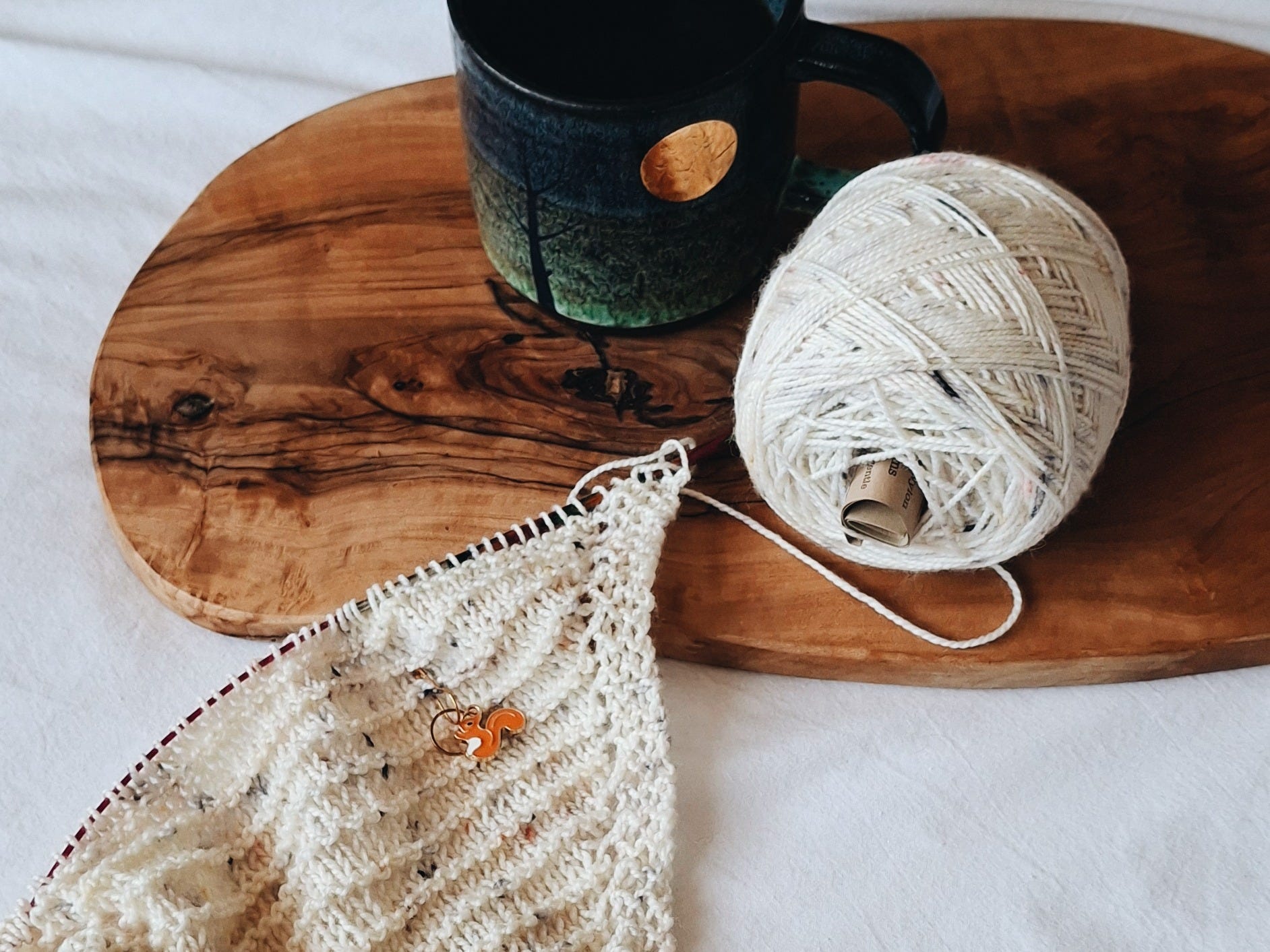
I recently came across a self styled influencer on Instagram who was posting about her slow-living, trad wife lifestyle. I’m sure you have all seen the kind of thing I am talking about. Lots of slightly out of focus shots of chickens being fed, gardens being gently tended. Linen featured heavily as did aesthetic shots of cordial in glass bottles.
I normally skip past that kind of content as it simply isn’t for me but this particular one had a caption that stopped me in my tracks
“Have the kind of summer your grandmother would recognise” - followed by an exhortation to join her summer ‘community’.
Really? The kind of summer my grandmother would have had? Are they really sure about that? When my grandmother worked, the most common occupation in our Lancashire town was in a cotton mill - 10hrs a day in a dry, fluff-filled atmosphere, deafening machines and back breaking work. The annual ‘wakes weeks’ were a welcome respite where the entire town would decamp to the nearest seaside by train - Blackpool in this case - for a holiday of donkey rides and walks on the prom. The week wasn’t given out of the kindness of the factory owners hearts. It was the week they closed the factory and stripped it out for deep cleaning. Ready for another 51 weeks of hard work.
So as to avoid overwhelming the various seaside towns it was standard practice for each northern industrial town to adopt a different week - staggering the influx of weary workers desperate for a bit of R&R. Growing up in Burnley, Lancashire the first week in July was always known as wakes week, even though most of the mills had closed down.

Is that really the kind of summer we are aiming for - I somehow doubt it. As I summarise the working life of one of my Grandmas I am thinking that for all of her hardships she did at least have a house, her health and a good, devoted husband. There are countless of millions of women who did not. They died in childbirth or had endless health problems after raising countless children. They were beaten, abused, worked in desperate conditions in munitions factories and so many other awful environments.
They built the country and the society we live in today and which we take so much for granted.
To reduce their lives, their contribution to a few soft focus images of country gingham is so insulting that it actually beggars belief. It denies the reality of countless women who have gone before us. It invalidates their experiences and even worse, tries to sell it back to us packaged as some kind of domestic idyll.
I don’t often swear in print (in person is another matter) but respectfully, f*ck off with that shit.
Bringing it back to knitting and craft in general - because everything comes back to it in the end - I think this is often why you get comments like ‘knitting is a dying art’ from well-meaning strangers.
In the past it was common to see women (and men and children) knitting as they went about their daily lives. For the simple fact that they had to if they wanted to be clothed.
Clothes were expensive and back then it was cheaper to make your own. It was not uncommon for handknits to be ripped back once they had reached the end of that particular life - and the wool rewound ready to be knit into something else. Socks, hats, mitts, sweaters, blankets and shawls were all constantly on the needles to keep ones family warm and dry. No wonder people knitted a lot, it was the unsung home industry that stopped people freezing to death.
Put simply, we don’t need to do that now. Clothes are cheap - arguably too cheap and people knit mainly for leisure, relaxation and as a hobby.
Some of the old productivity myths still remain - like a woolly hangover. I was once congratulated by an elderly gent on a bus who assumed that because I was knitting I must be expecting a baby. He couldn’t imagine why else I would be knitting.
Women who are seen knitting in public are often asked who they are knitting for - the unspoken assumption being that knitting must always somehow be in service for others (heaven forbid you knit something just because it is pretty).
Incidentally if you want to cast on for that bright pink, glittery Kindle case for no other reason than ‘because’ consider this your permission slip.
We have the luxury of time and resources that our grandmothers could only dream of. And there is no way, looking at my life now that my grandma would ever wish her adult days on me. She would take a deep drag on her cigarette, call the Instagram influencer a “daft ha’p’orth”* and then laugh like a drain at the thought that I would want to spend my days filling the coal skuttle or blacking the fire grate.
*a foolish person considered to be only worth half a penny.

I wrote a Note about this story which really seemed to resonate with a lot of people. I can’t link to it as I managed to delete it in a spectacular fit of Substack incompetence. But if you’d like to share your Grandmother’s stories in the comments please do - especially if they would have a choice epithet for such misty-eyed influencers.


If you enjoyed this you might also enjoy
Knitting and Ageism...part two

It turns out that I’m not done with this subject quite yet. There is more to say, it seems. Part of this has been sparked by a conversation with members of my paid Substack Everyday Knitter community and this post is really an amalgamation of two of my previous posts. The
Knitting, AI and the Gotham Grannies

Thank you for reading Everyday Knitter. This post is public so feel free to share it.
Haven't head the wonderful phrase "daft ha'porth" out in the wild for far too long. But yes, this was my grandmother's world, too. She worked as a seamstress in a sweat shop that expected her to turn out a coat in half an hour. One of her sisters escaped to Blackpool (which was like an Irishman getting to New York in the Lancashire working-class of that time). She became a seaside landlady and died in her late 30s of pneumonia, largely brought on by overwork.
When I see people glamorise knitting I remember the story of the woman who knitted a Fair Isle jumper in four days to fulfil a rush order from the then Prince of Wales. She literally worked day and night, while members of her family spooned food into her mouth.
I totally recognise your grandmothers. Through a complicated family I had the privilege of 4 northern, working-class grandmothers and one surrogate grandmother (to say nothing of mothers and aunts and sisters). All completely different personalities, all lives determined through depression and war. Different town (6 miles or so to the south of you) but the same experiences of mills and factories. All just trying to make it better for their families. When I first began to knit again in my 40s I had a hard time reconciling my need to knit for pleasure with the knowledge that those who had taught me the skill all those years ago themselves were taught at a young age to clothe their families. It took a long time for the guilt to ease, I'm not sure it's ever gone away.